China’s new AI-driven underwaterdrones promise long endurance, silent operation, and autonomous attacks—raising hard questions for U.S. and allied naval planners.
The vast expanse of the Pacific Ocean, over 5,000 nautical miles across, protects the West Coast of the United States against Chinese naval forces in the event of a war. The appearance of new extra-extra-large underwaterdrones (XXLUUVs) changes this, providing China with low-risk options to directly threaten West Coast ports.
The XLUUV, or “Orca” is an autonomous submarine designed by Boeing for the United States Navy (USN). This is a first-of-type extreme endurance autonomous platform, delivering an unprecedented package of capacity, mission flexibility and reliability.
Unmanned underwater vehicles (UUV), also known as underwaterdrones, [1] or unmanned submarines, are submersible vehicles that can operate underwater without a human occupant, either remotely operated underwater vehicles (ROUVs) or autonomous underwater vehicles (AUVs).
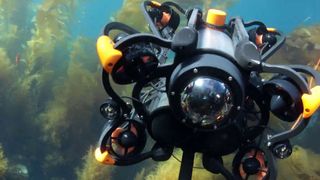
Now, we are creating a new class of uncrewed underwater vehicles (UUV) with Manta Ray. Taking its name from the massive “winged” fish, Manta Ray will operate long-duration, long-range missions in ocean environments where humans can’t go.
Our experts have rounded up the best underwaterdrones and ROVs available right now. We’ll explain what sets them apart and point out the key features so you can pick the right one for you.
South Korea’s Hanwha, US Defense Startup Vatn to Build UnderwaterDrones By David Jeans NEW YORK, Dec 10 (Reuters) - South Korean shipping giant Hanwha Group has teamed up with U.S ...
The U.S. Navy’s Orca drone, also known as the Extra-Large Unmanned Undersea Vehicle (XLUUV), has been in development for years, but will soon be in the hands of sailors as the sea service works to figure out how they will use the capability going forward.
The development of Submarine-Launched Unmanned Aerial Systems (SLUAS) marks a turning point in underwater warfare, merging two critical domains of military operations: the stealth of submarines and the intelligence-gathering capabilities of aerial drones.
In a breakthrough that could revolutionize underwater exploration and military surveillance, research funded by the U.S. Navy demonstrated that autonomous underwater vehicles (AUVs) can use their self-generated noise to “see” beneath the ocean floor.